The Tsavo Conservation Area (TCA) is one of the largest protected ecosystems in East Africa, covering more than 42,000 km². At its core are Kenya’s largest official Protected Areas: the Tsavo East, Tsavo West and Chyulu Hills National Parks, covering around 22,000 km², or 49% of Kenya’s National Parks. The remaining 20,000 km² is made up of surrounding ranches, community and communal land that provides critical habitat and wildlife corridors, that buffers the Protected Areas, and supports the rural communities who live alongside wildlife.
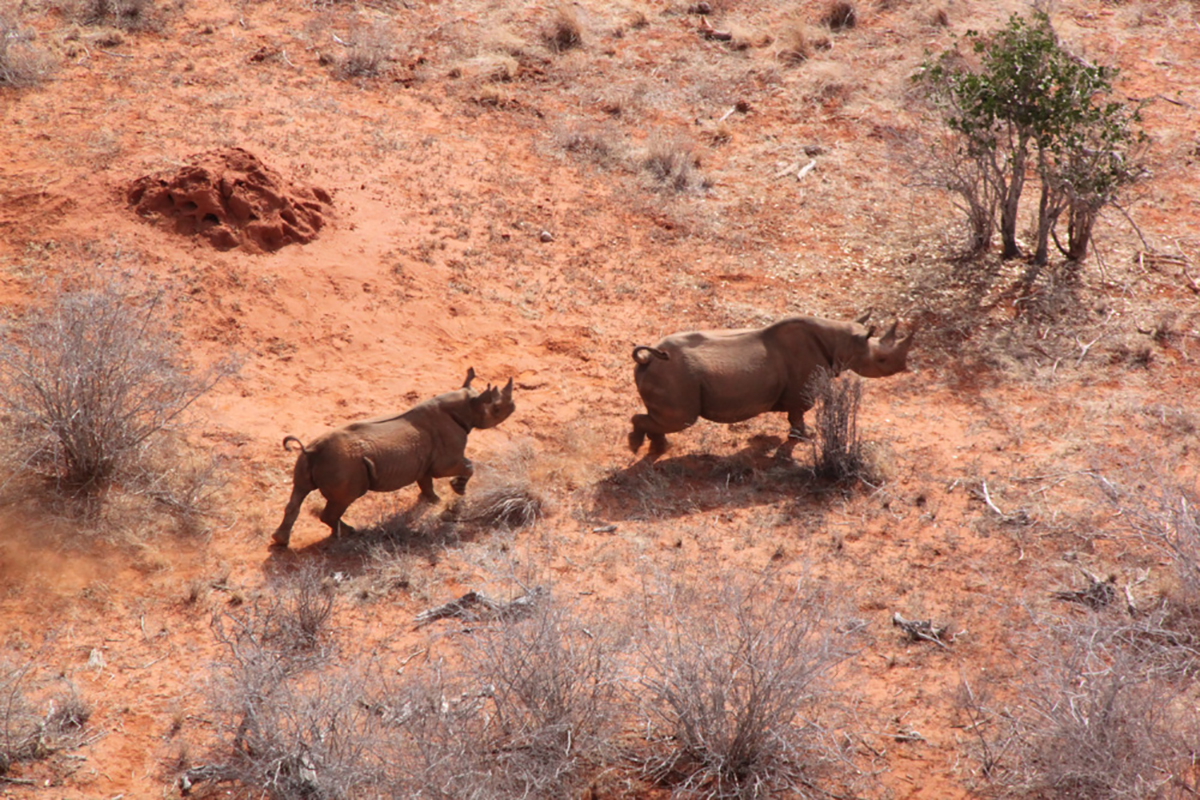
It is a landscape of national and global significance. The TCA holds the largest single elephant population in Kenya, 22% of the country’s black rhino, a Key 1 population, and one of only two remaining populations of the critically endangered Hirola antelope, alongside lion, African painted wolves and other high-value species. It is also home to the last viable population of “Big Tusker” elephants, whose tusks scrape the ground.
These species face serious and sustained pressure: from poaching and the illegal wildlife trade, from habitat loss and a changing climate, and from growing human-wildlife conflict as people and wildlife compete for scarce space and water — pressures that are deepened by the poverty and limited opportunity facing the communities who share this landscape. At this scale, no single organisation can secure the TCA alone; it depends on long-term partnerships and a permanent presence on the ground.
This is where Tsavo Trust works. A field-based organisation staffed largely from the local community, we are based near Ngiluni Village inside the Kamungi Conservancy, on the northern boundary of Tsavo East National Park. Working in direct support of the Kenya Wildlife Service (KWS), the Wildlife Research and Training Institute (WRTI), and alongside the communities that border the Protected Areas. We help protect this landscape and the species that depend on it.
The landscape, piece by piece
No two corners of Tsavo look alike. Each part of the landscape plays a different role, from dry-season refuge to breeding stronghold to the buffer zone where wildlife and people share the same ground.

Tsavo East National Park
Kenya’s largest national park: open plains, the Yatta Plateau and the Galana River, and a stronghold for a growing Super Tusker population.
Tsavo West National Park
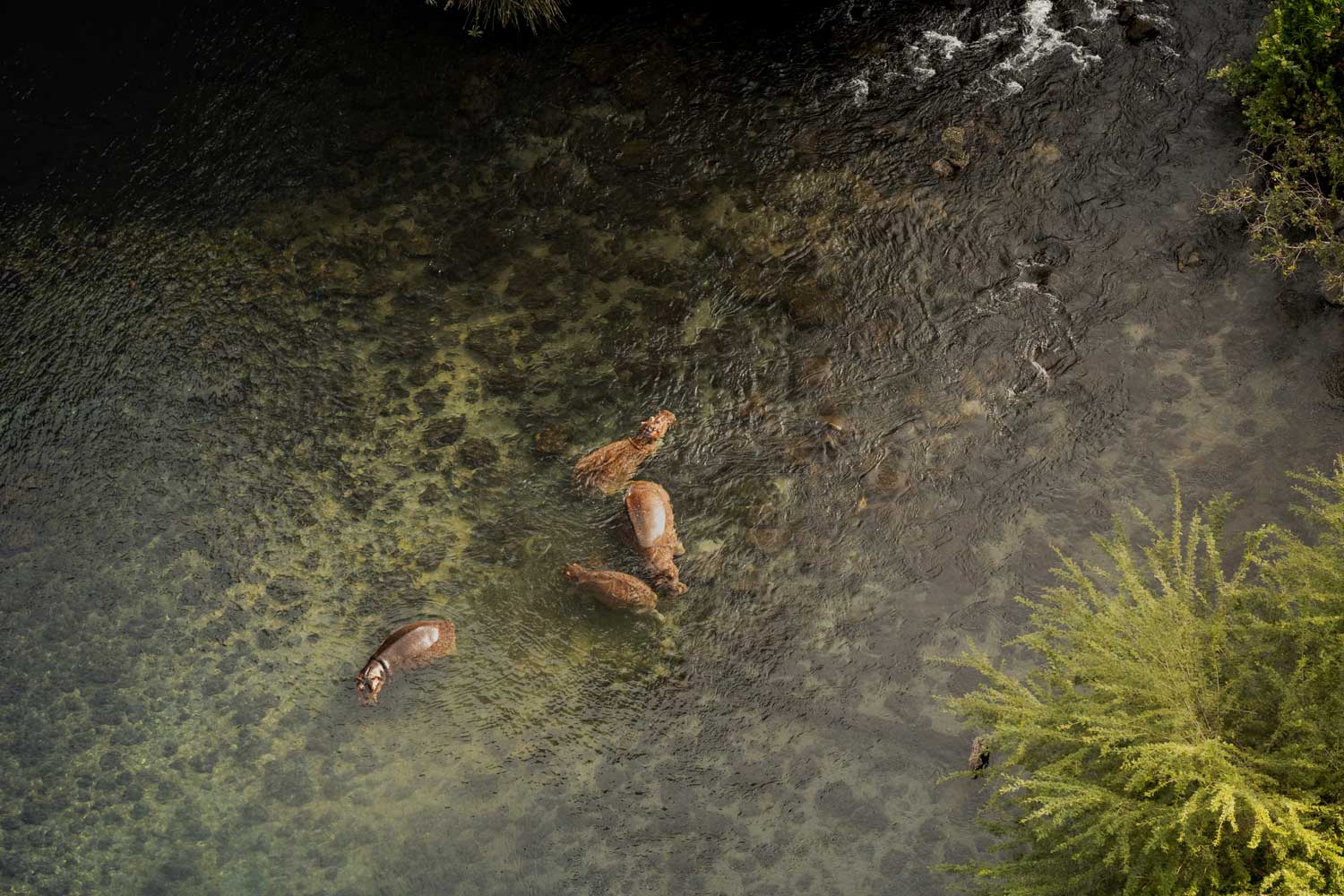
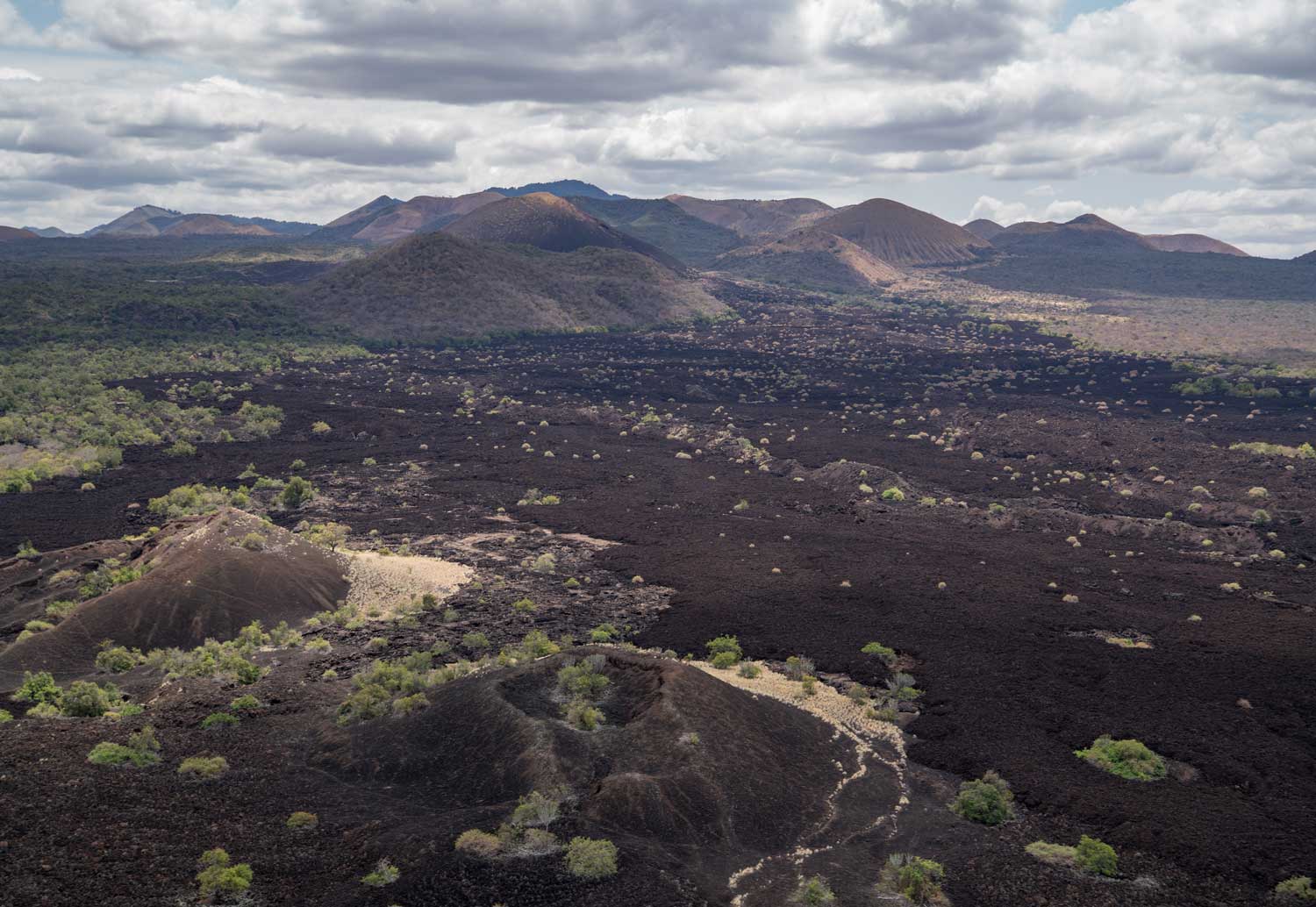
A dramatically varied park of volcanic hills, lava flows and the spring-fed Mzima Springs, home to the Tsavo West Rhino Sanctuary, a single 3,000 km² landscape and the world’s largest.

Kamungi Conservancy
A community-led conservancy on Tsavo East’s northern boundary, the vital buffer zone where people and wildlife share the same ground, and home to Tsavo Trust’s Ngiluni headquarters.
Chyulu Hills
One of the youngest volcanic ranges on Earth, still forested and largely untouched, forming a green corridor that links Tsavo to Amboseli.
A living system
Rivers, springs and rock, all connected.
Water is what holds Tsavo together. The Galana River, formed where the Athi and Tsavo rivers meet, and the Mzima Springs are the landscape’s lifelines, drawing wildlife from across the ecosystem through the long dry months. The springs at Mzima rise from rain that falls on the Chyulu Hills and filters slowly through their porous volcanic rock, emerging clear and constant on the Tsavo West plains. Along the western edge of Tsavo East, above the Athi River, runs the Yatta Plateau — one of the longest lava flows on Earth at nearly 300 km, a spine of ancient rock across the landscape.
This is red-earth country. Tsavo’s famous “red” elephants take their colour from dust-bathing in the iron-rich volcanic soil. That same soil is thin, and the rainfall low and unreliable, making much of the landscape marginal for farming, one of the reasons so much of it has remained a stronghold for wildlife.