
In Support of KWS & WRTI • Tsavo East
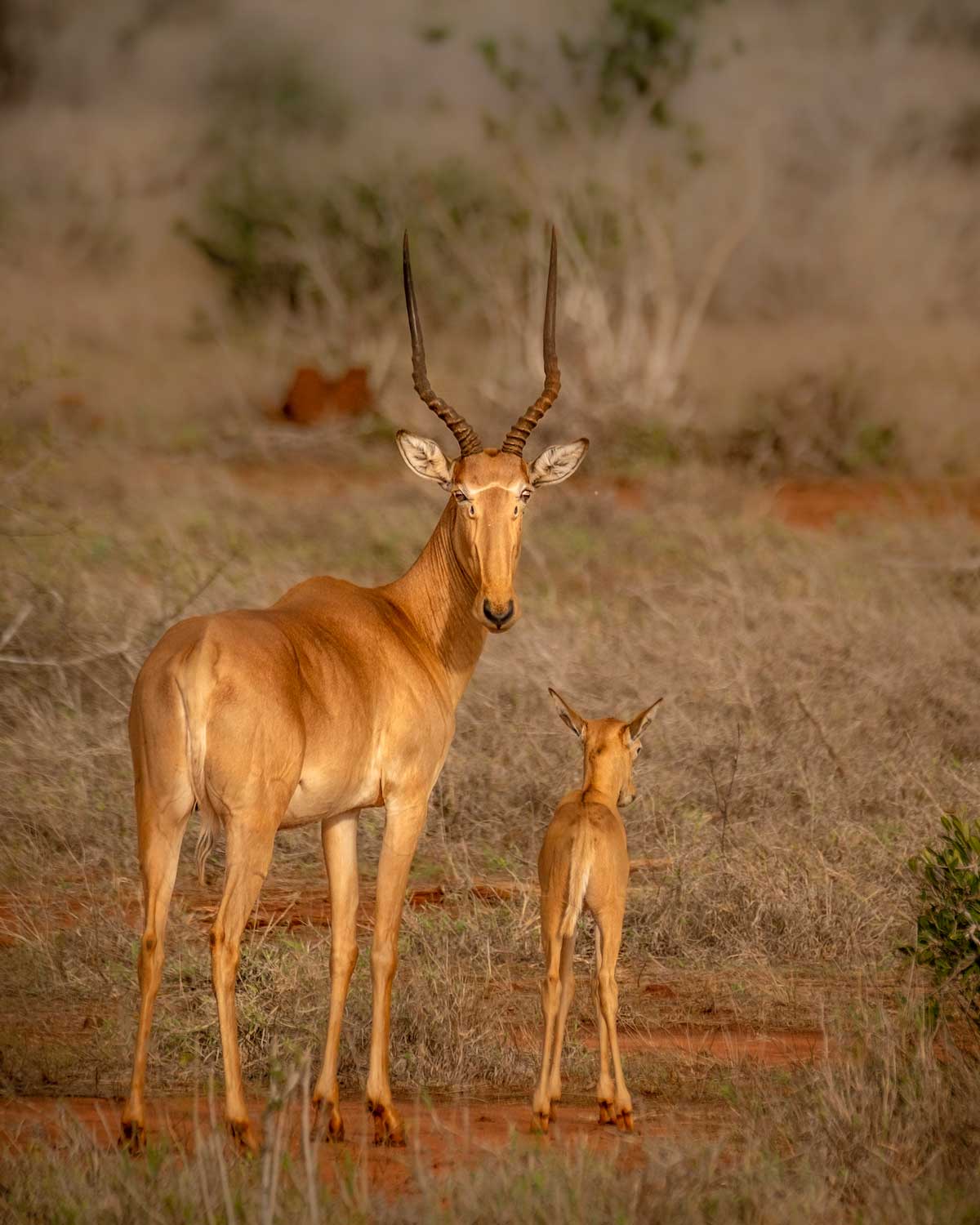
Only a few hundred hirola are thought to remain in the wild, almost all in a small area on the Kenya-Somalia border where they face habitat loss and predation. Decades ago a small population was translocated to Tsavo East National Park as an insurance against extinction, and it remains one of the very few hirola herds anywhere under continuous, formal monitoring.
KWS leads this work in line with national species priorities, and WRTI guides the science. Tsavo Trust supports KWS and WRTI to deliver it, recording sightings, calves and mortalities so decisions rest on real field data. The most recent census, carried out jointly by WRTI and Tsavo Trust in 2025, recorded around 80 hirola in 11 herds, with calves and sub-adults pointing to a healthy, breeding population.
How the work happens
Counting a species one sighting at a time.
Why it matters
Lose the hirola, and the world loses an entire branch of the antelope family tree. Tsavo’s monitored herd is a living insurance policy against that loss.
Keep watch over the rarest of all.
Your support keeps the monitoring presence that safeguards Tsavo’s hirola in the field.